Astronomy learning platform
AstroVerse
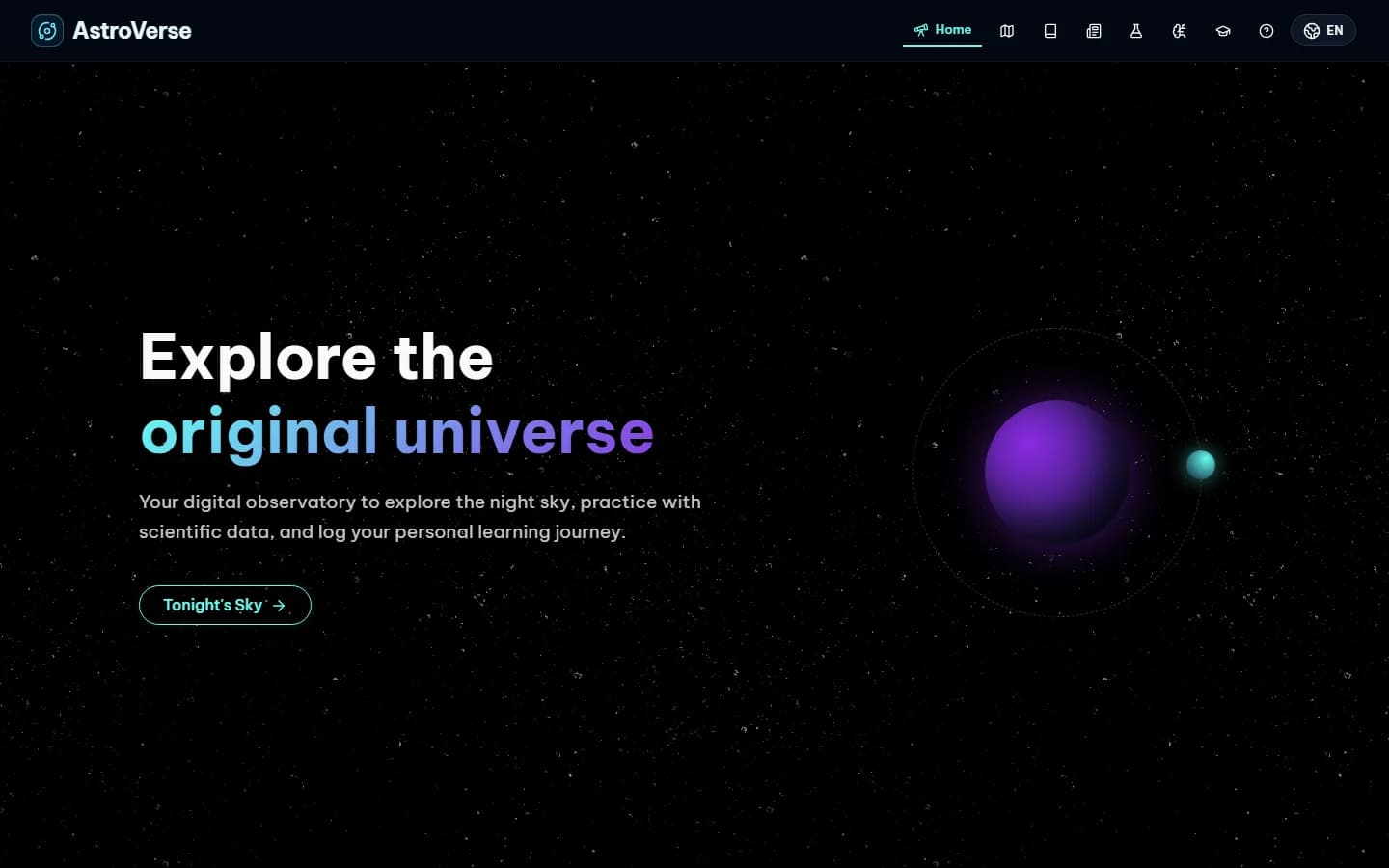
A browser-based astronomy learning environment that connects sky observation, verified space data, physical modelling, active recall, and scientific reflection in one continuous learning loop.
- Role
- Product Developer
- When
- 2026
- Mode
- Digital product
01 / Context
The problem
Astronomy resources are often split between passive articles, specialist tools, and disconnected quizzes. The goal was to make exploration, experimentation, and reflection feel like one continuous learning journey.
Approach
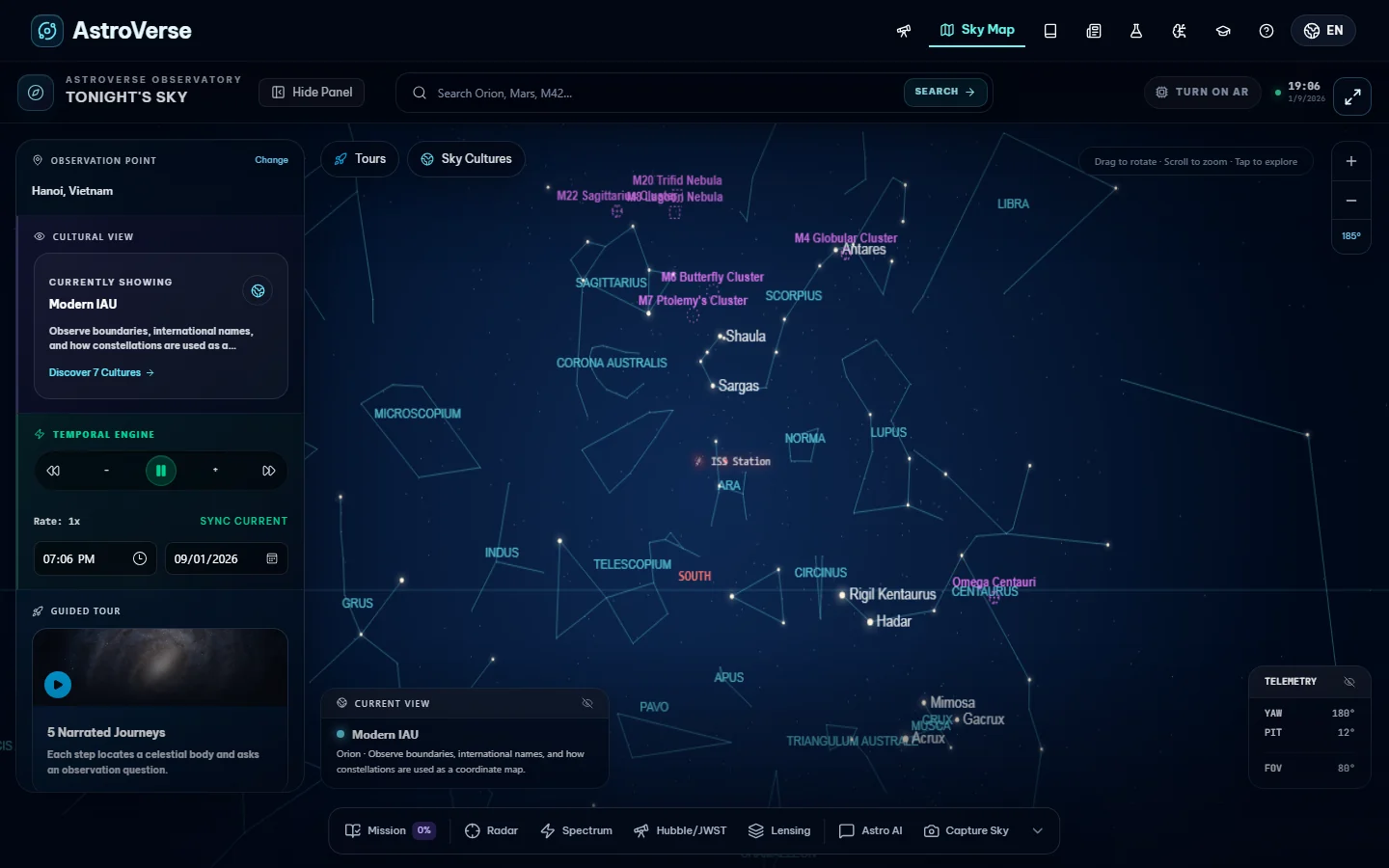
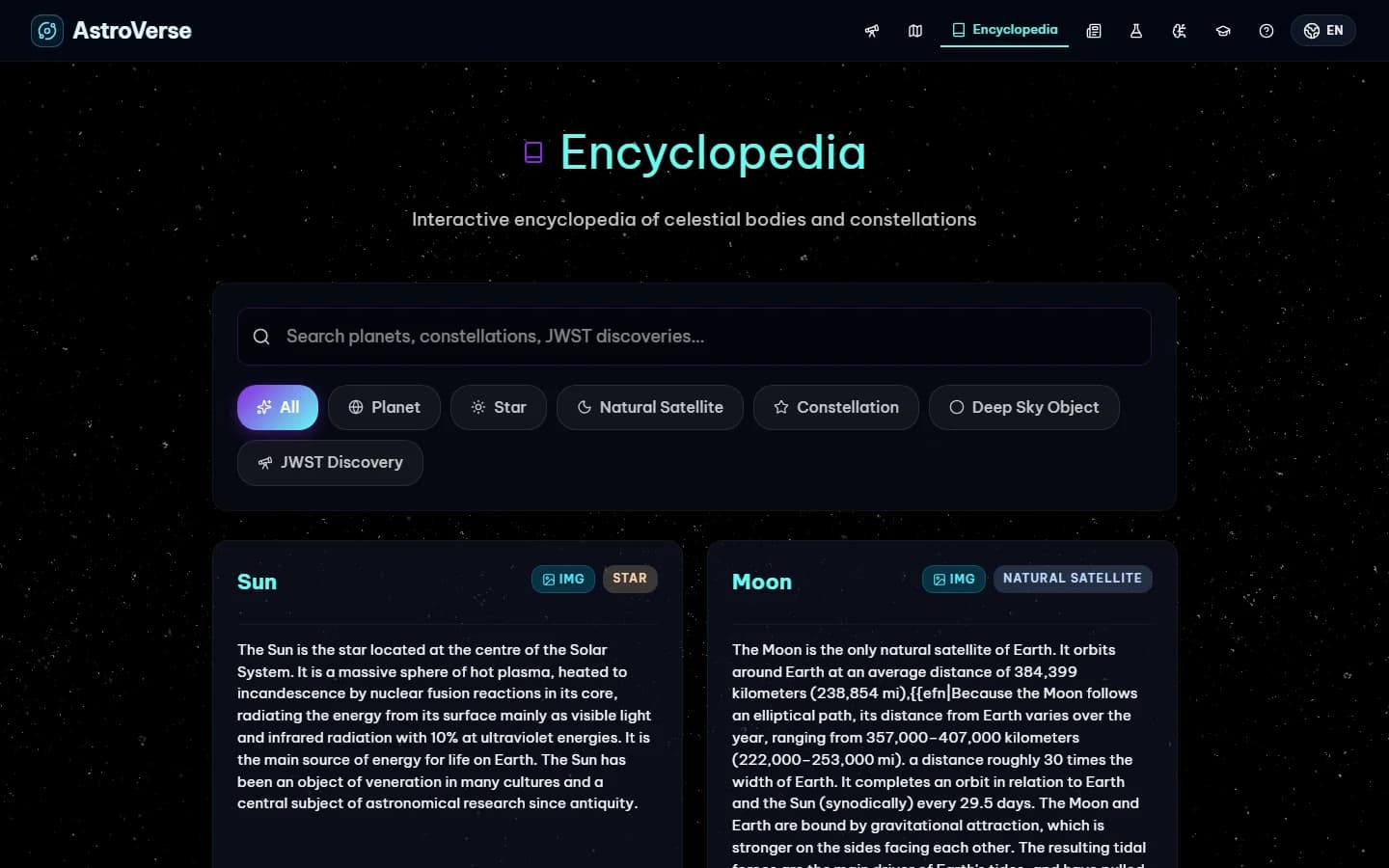
AstroVerse organises the experience into five modes: Observe through an interactive sky map, Explore verified astronomy content, Experiment in a habitable-exoplanet lab, Recall through spaced repetition, and Reflect in a private science journal.
02 / Contribution
What I contributed
- 01
Developed an interactive sky map with time controls, guided journeys, and seven cultural sky views.
- 02
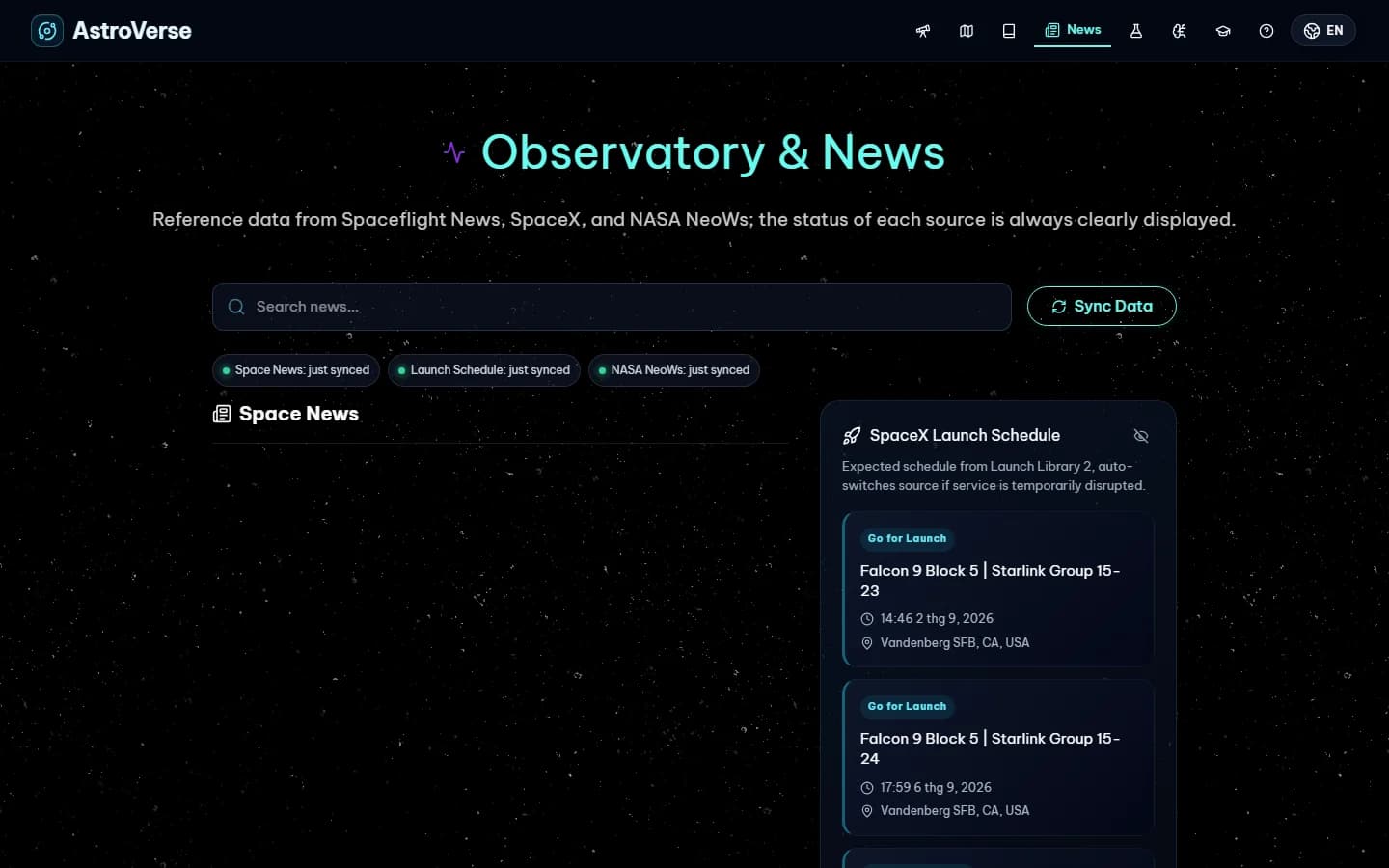
Connected a searchable astronomy encyclopedia, space news, launch schedules, and NASA data with visible source attribution.
- 03
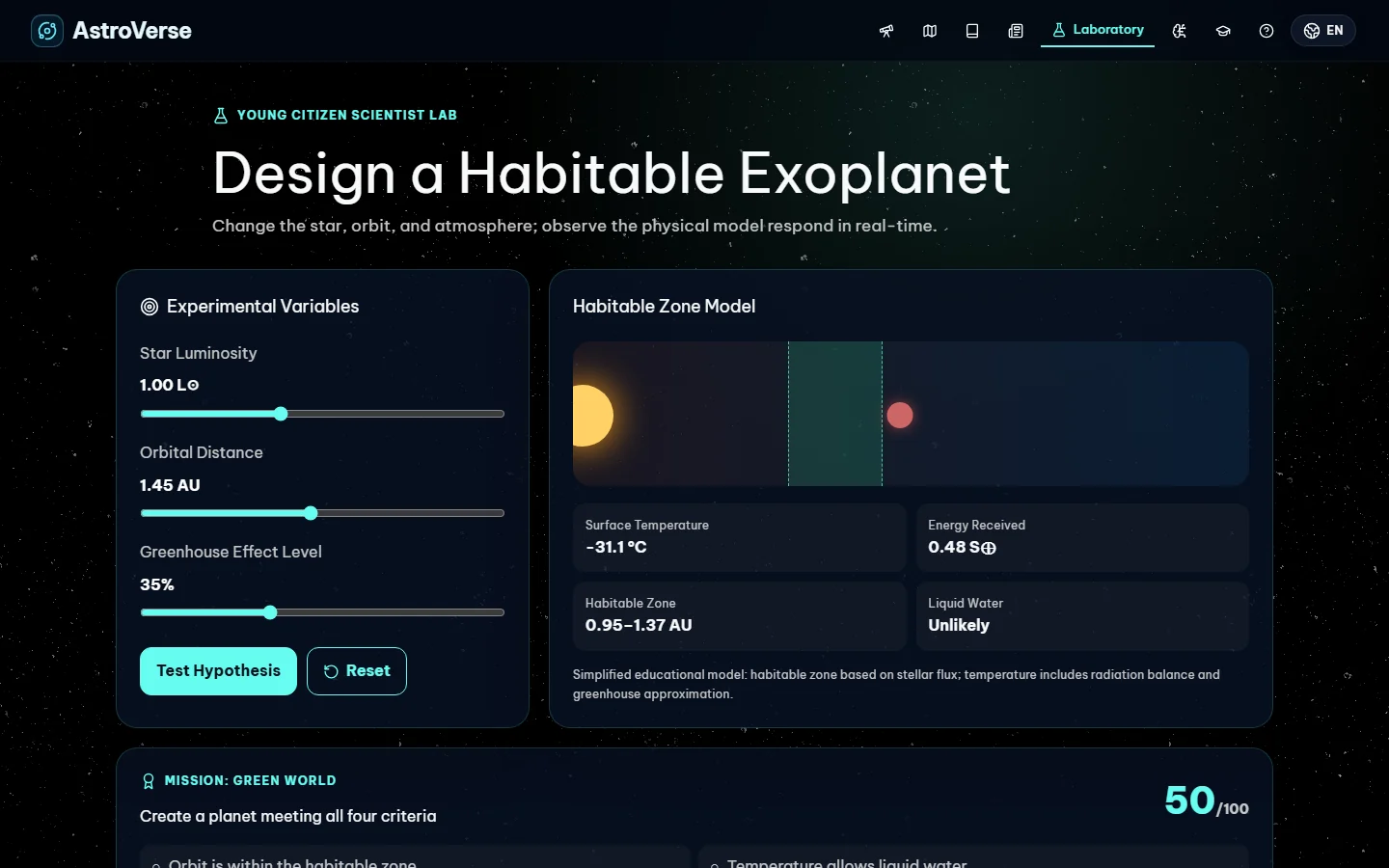
Built an exoplanet laboratory with real-time physical feedback and mission scoring.
- 04
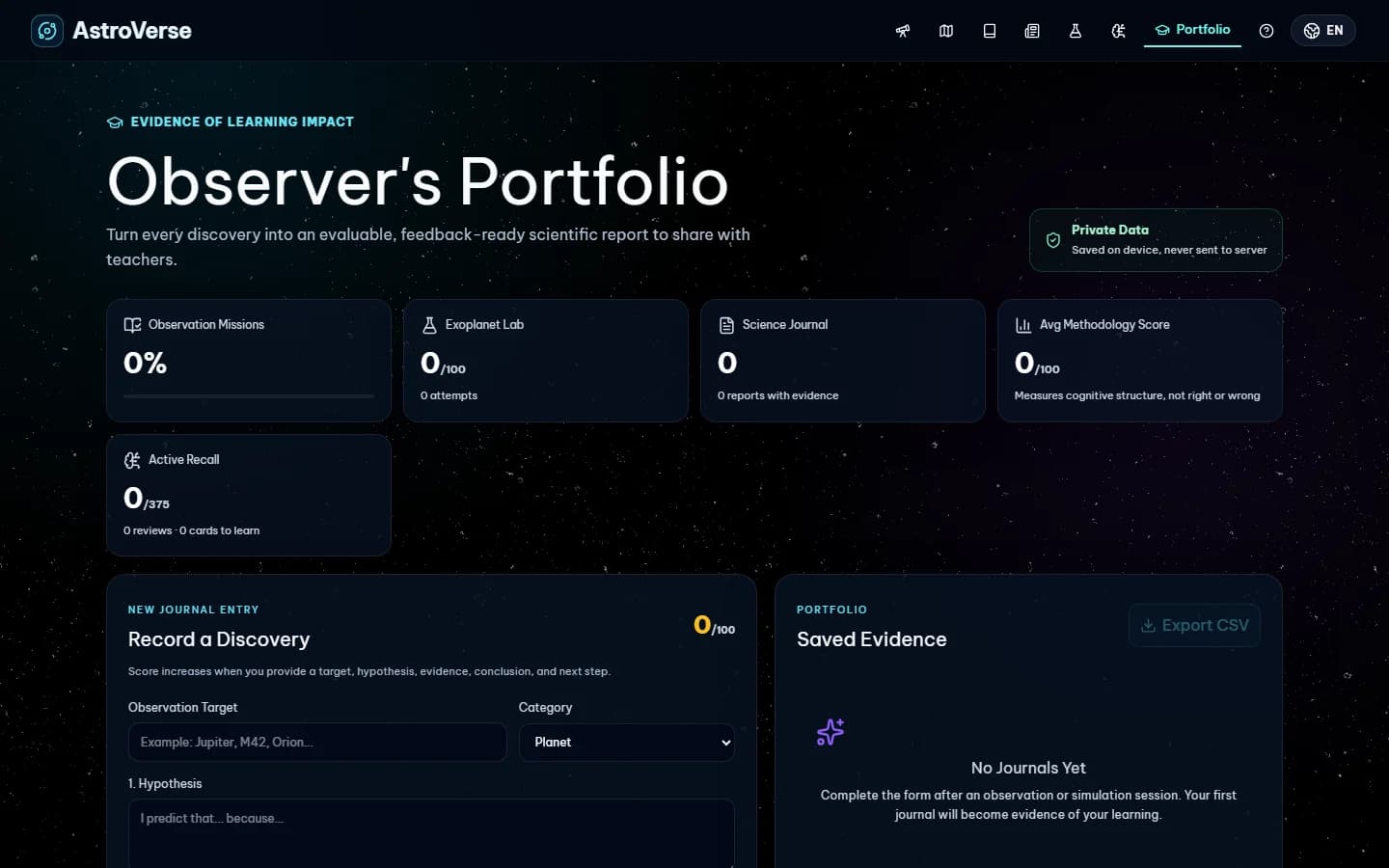
Designed spaced-repetition review and a private learning portfolio that records evidence and scientific methodology.
03 / Decisions
Technical decisions
One learning loop
Connect observation, explanation, experimentation, recall, and reflection instead of treating them as unrelated pages.
Evidence over streaks
Measure hypotheses, observations, conclusions, and next steps—not just clicks or quiz completion.
Private by default
Keep journals and progress on the learner’s device, allowing practice without requiring an account or server-side profile.
04 / Project gallery
Evidence, interfaces, and process.
05 / Evidence
Outcome
- Shipped a live, multi-module astronomy learning product.
- Combined real scientific sources with interactive simulations and active-recall tools.
- Created a portfolio flow that turns each learning session into feedback-ready evidence.