Independent engineering project · Ongoing
eSight
A student-led smart cane using ultrasonic sensing, computer vision, and graduated audio feedback to support safer navigation for people with visual impairments.
- Role
- Project Lead
- System
- Assistive smart cane
- Current stage
- Working prototype · ongoing refinement
00 / Overview
Assistive feedback as an engineering system.
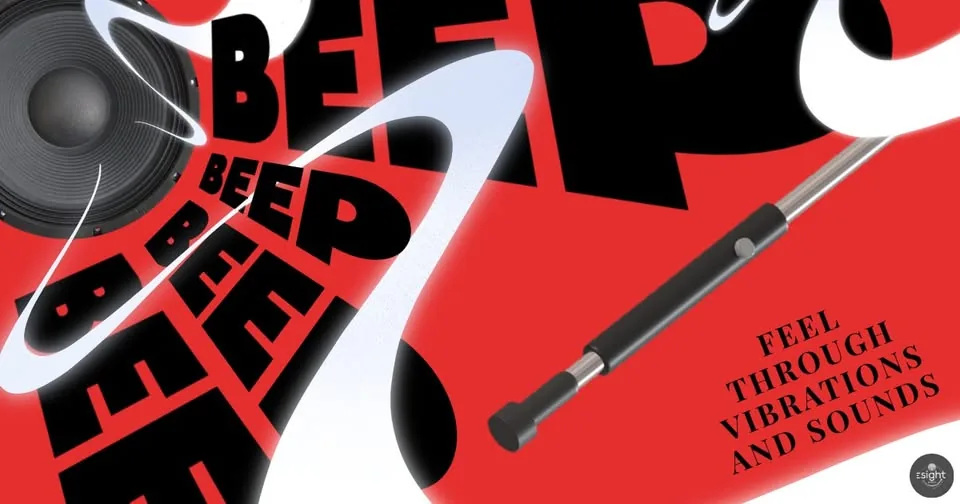
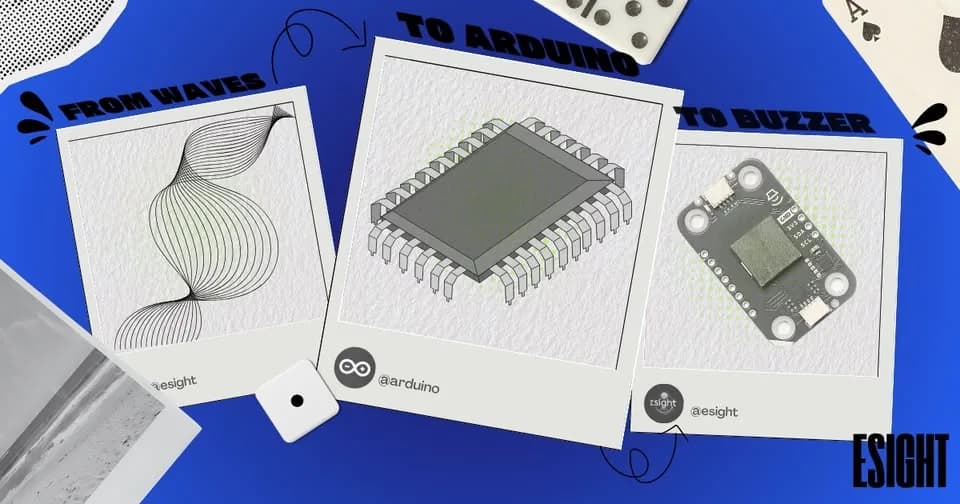
eSight combines ultrasonic sensing and computer vision with an Arduino-based controller. Sensor data is interpreted as levels of risk, then communicated through graduated buzzer patterns: silence in a safe path, slow alerts at distance, faster pulses as an obstacle approaches, and a continuous warning in the danger zone.
01 / Problem
The problem
For people with visual impairments, navigating an unfamiliar space means detecting obstacles early without adding confusing or intrusive feedback. A useful smart cane must sense the environment reliably and translate changing distance into signals the user can understand immediately.
Design priorities
- Detect nearby obstacles early enough to support safer navigation.
- Make urgency understandable through changing feedback patterns.
- Keep the system quiet when the path is safe.
02 / System architecture
From environmental input to user feedback.
- 01Sense
Ultrasonic distance sensing and computer vision
- 02Interpret
Arduino-based control logic evaluates distance and risk
- 03Decide
The system maps changing risk to warning levels
- 04Communicate
Graduated buzzer patterns provide immediate feedback
03 / Contribution
My contribution
- 01
Led the project from problem framing through prototyping, testing, and presentation.
- 02
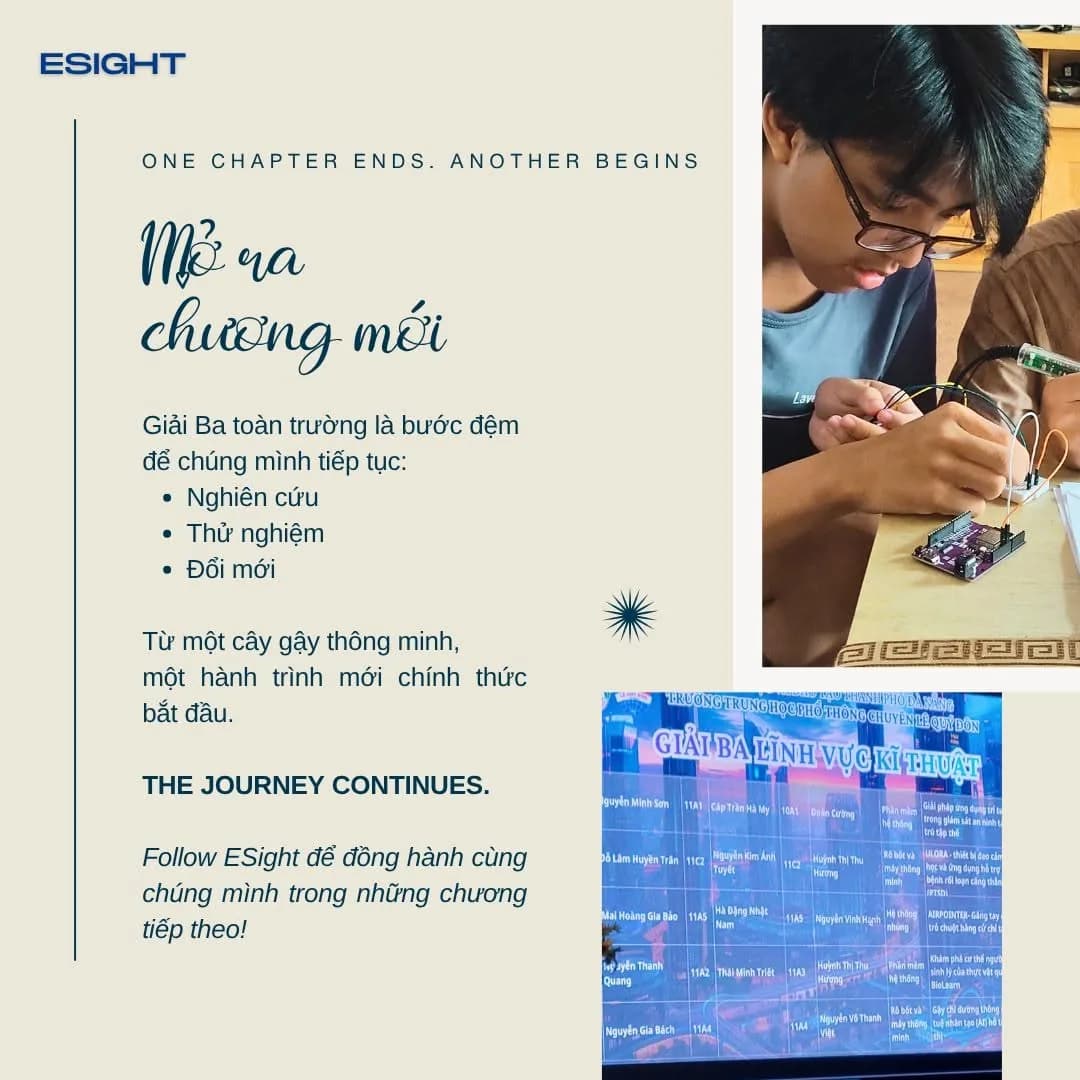
Coordinated the integration of sensing, Arduino control logic, and user feedback.
- 03
Applied physics reasoning to translate distance measurements into graduated warning behaviour.
- 04
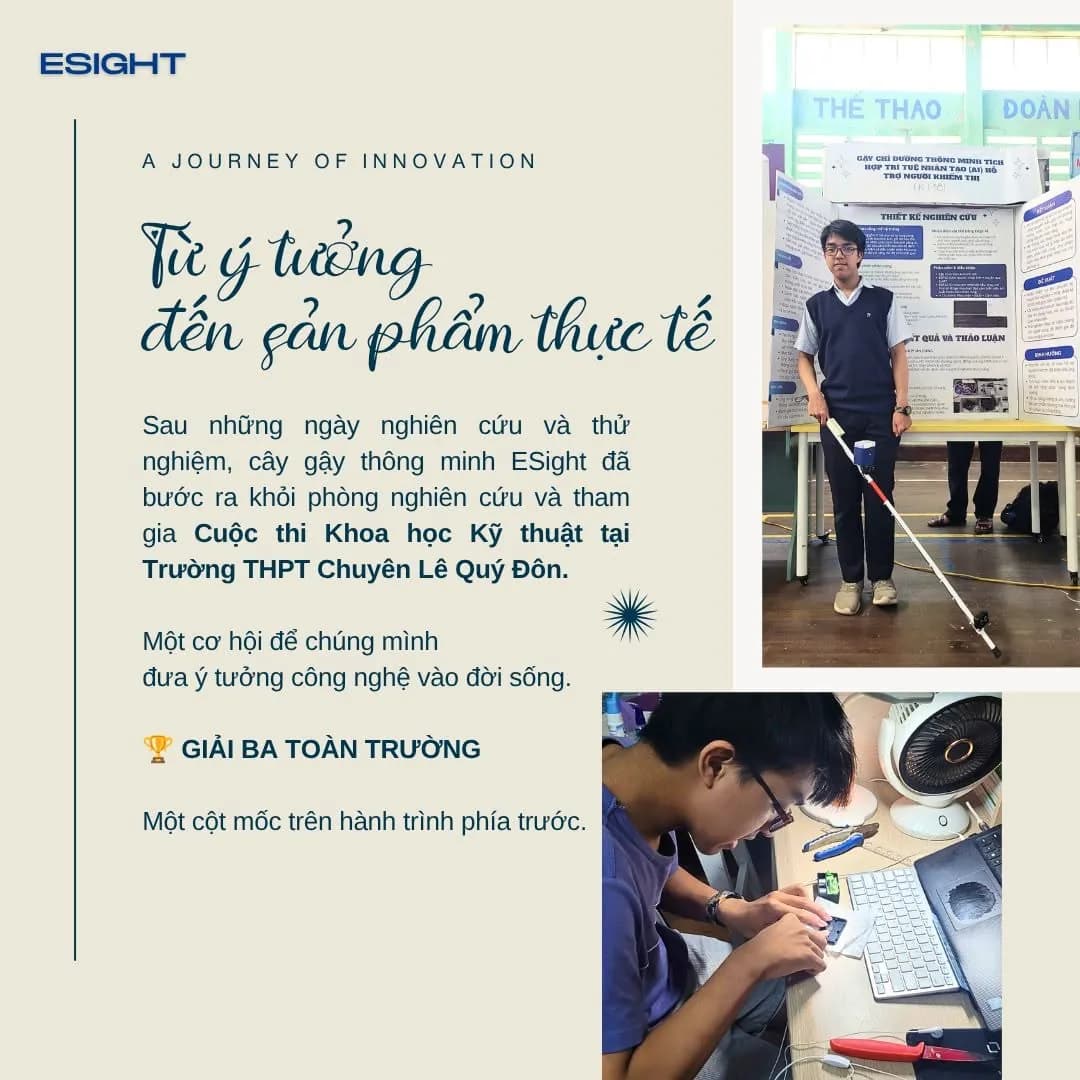
Documented the engineering process and presented the working smart cane at the school Science & Engineering Competition.
04 / Engineering decisions
Decisions that shaped the prototype.
Layer the warning
Use graduated audio patterns instead of a single alarm so urgency increases with proximity.
Combine sensing methods
Pair ultrasonic distance sensing with computer vision to extend awareness beyond one source of environmental data.
Design around the user
Keep the system quiet in safe conditions and make alerts clear without drawing unnecessary attention.
05 / Prototype evidence
Build, integration, and presentation.

06 / Current evidence
Current result
- Built and demonstrated a working student-designed smart cane.
- Awarded Third Prize at the Le Quy Don High School for the Gifted Science & Engineering Competition.
- Created an assistive-technology platform that can continue through further testing and refinement.